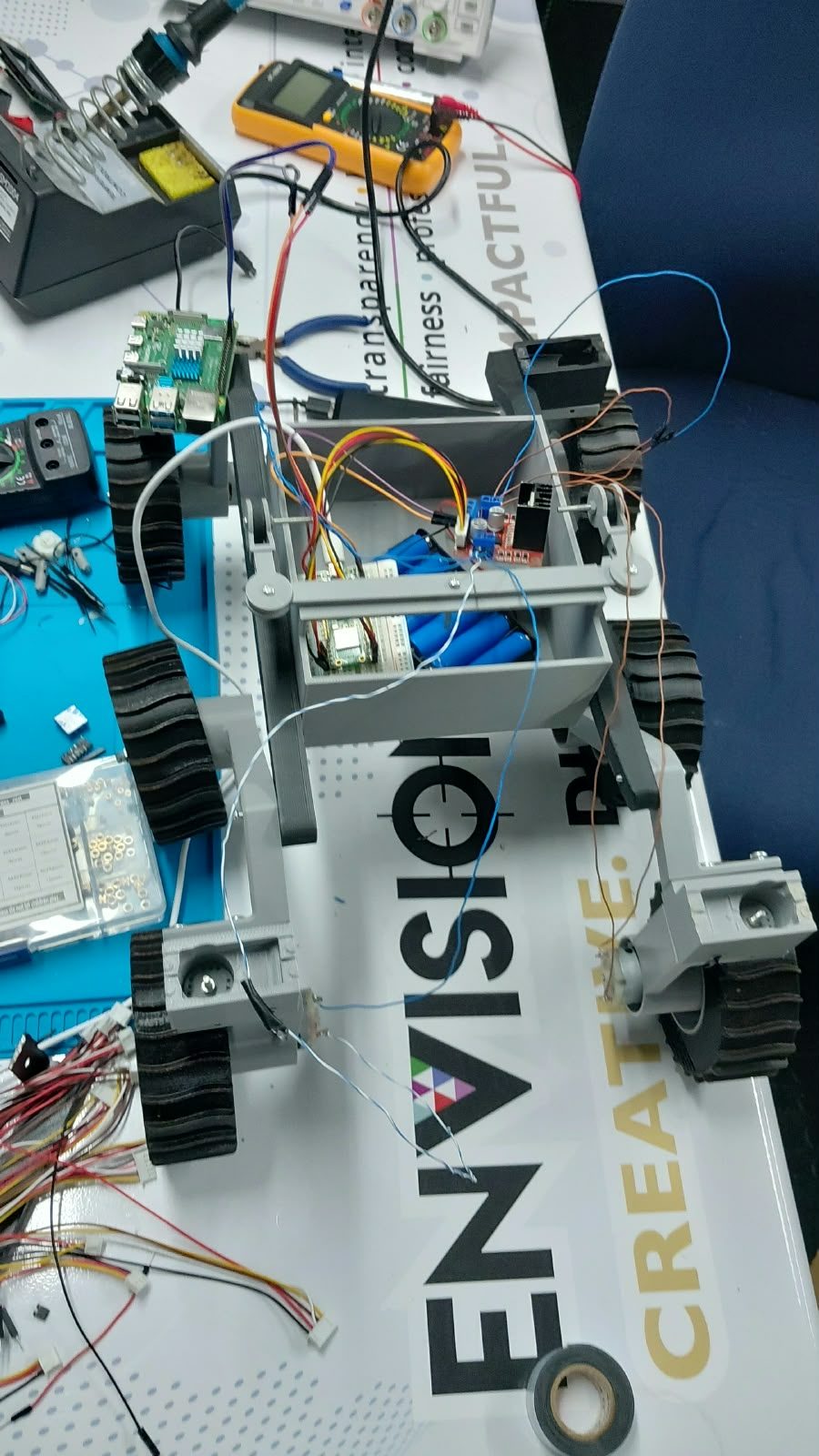
The platform
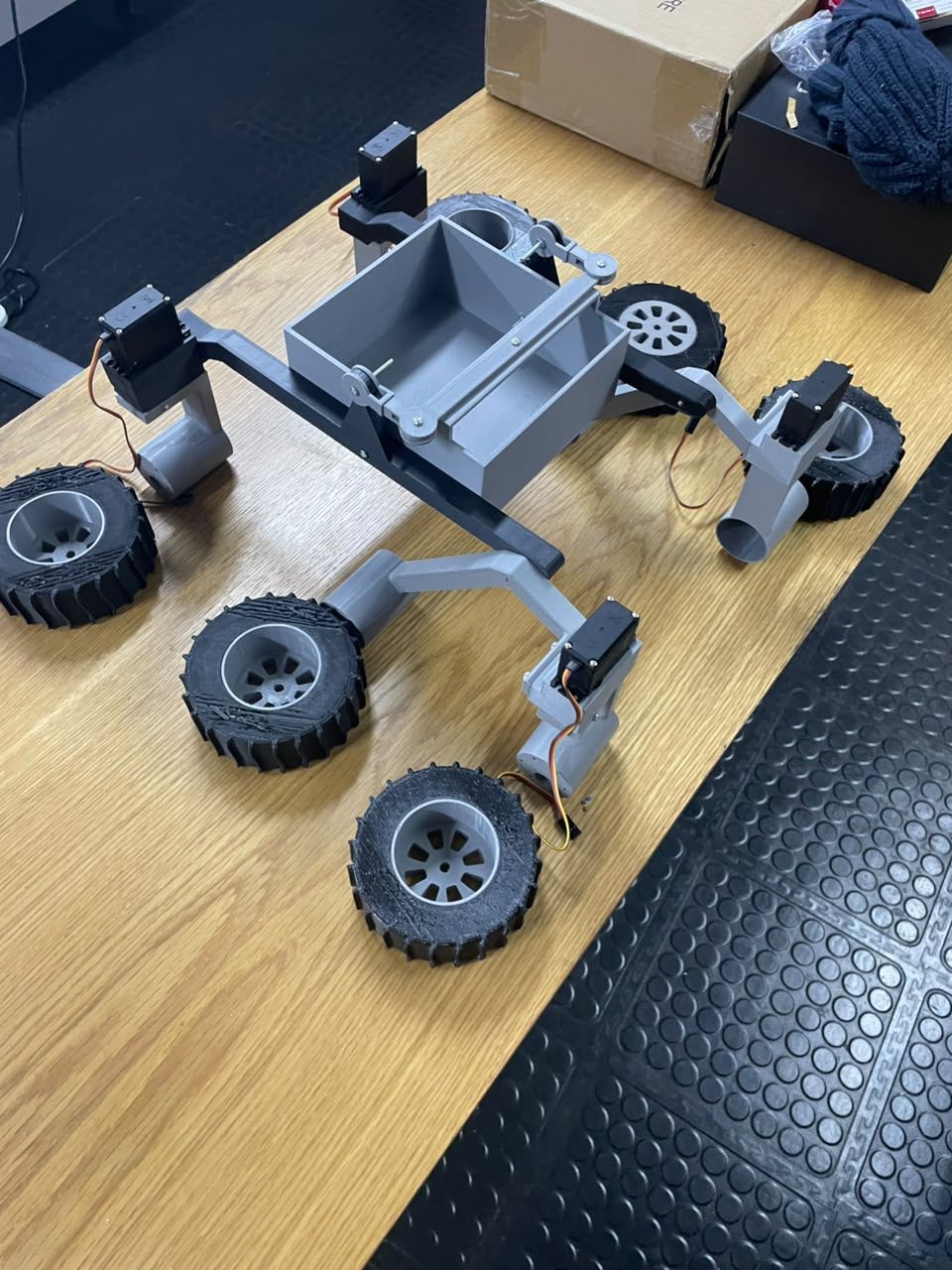
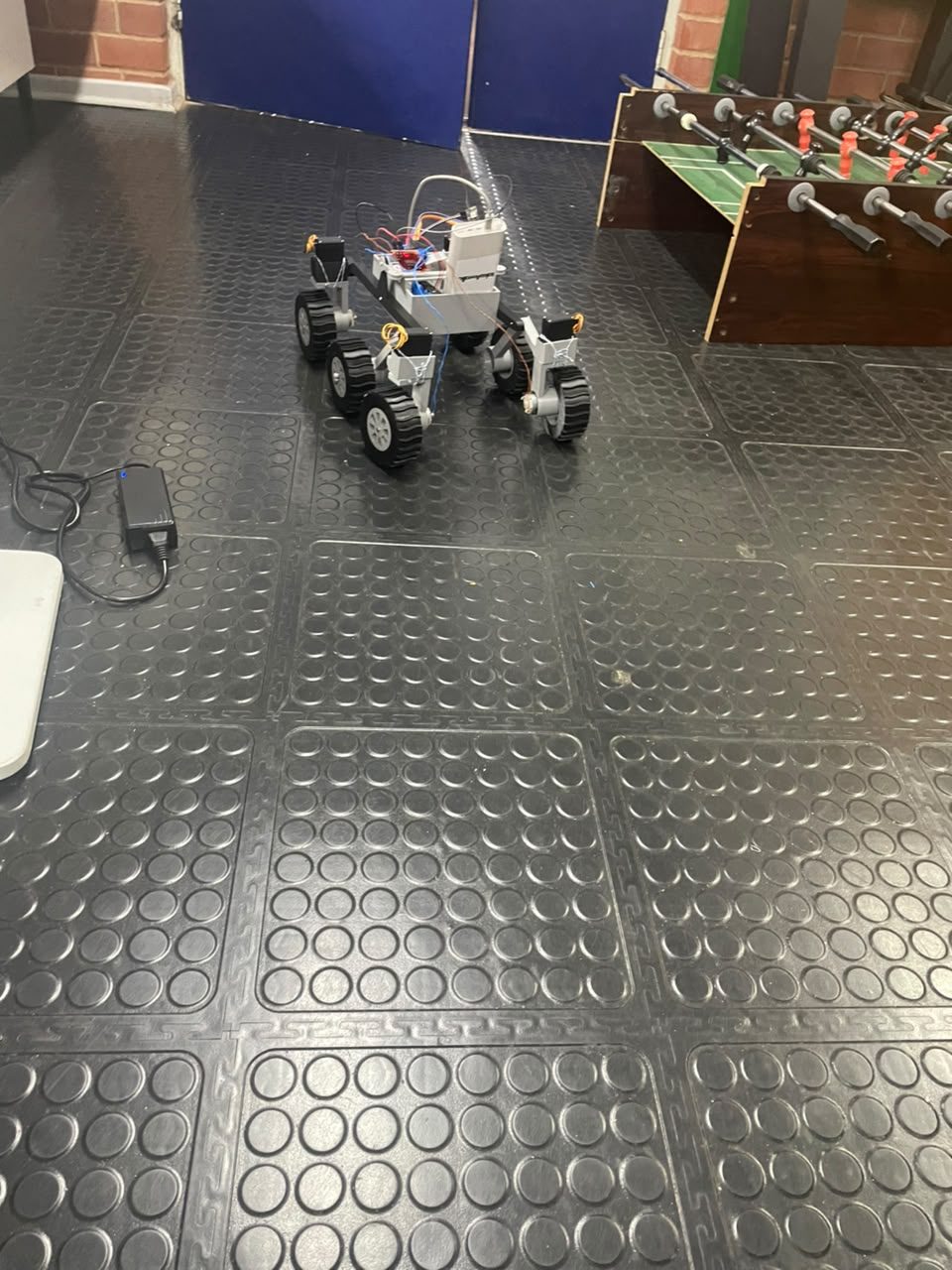
The rover is a 6-wheel, independently driven chassis with a rocker-bogie inspired suspension that keeps the wheels loaded across sand, rock and slope transitions. It is built in-house with a modular, repairable layout so a failed module can be swapped between runs rather than ending the day.
It is wirelessly controlled to about 80 m with an onboard camera feed, and runs object detection for the three competition targets: a hammer, a tennis ball and a traffic cone.
Mission profile
- Launch stage: technical report, video and presentation before the field runs.
- Mars stage: traversal for 250 points, then autonomous operation for 150 points.
- Video streaming is scored as infrastructure: losing the feed carries a 60% penalty, so the link budget and encoder settings matter as much as the drive train.
- Balloon detection and sequential waypoint navigation under competition time pressure.
Electronics and power
The electronics bay carries motor drive, power distribution and the compute module for vision. The design tension is always the same: more compute means more current, and more current means less runtime on a battery pack that has to stay inside the mass budget.
Power distribution is built around replaceable modules with current-limited rails, so a shorted sensor does not take out the drive. Telemetry and video share the wireless link, which is why the video path is treated as a first-class subsystem rather than an accessory.
Next rover
The follow-on design moves from competition prototype to research platform: a larger chassis and payload bay for scientific instruments, AI and SLAM navigation instead of waypoint following, a power system sized for longer missions, and ruggedisation for harsher terrain and greater range.
Figures