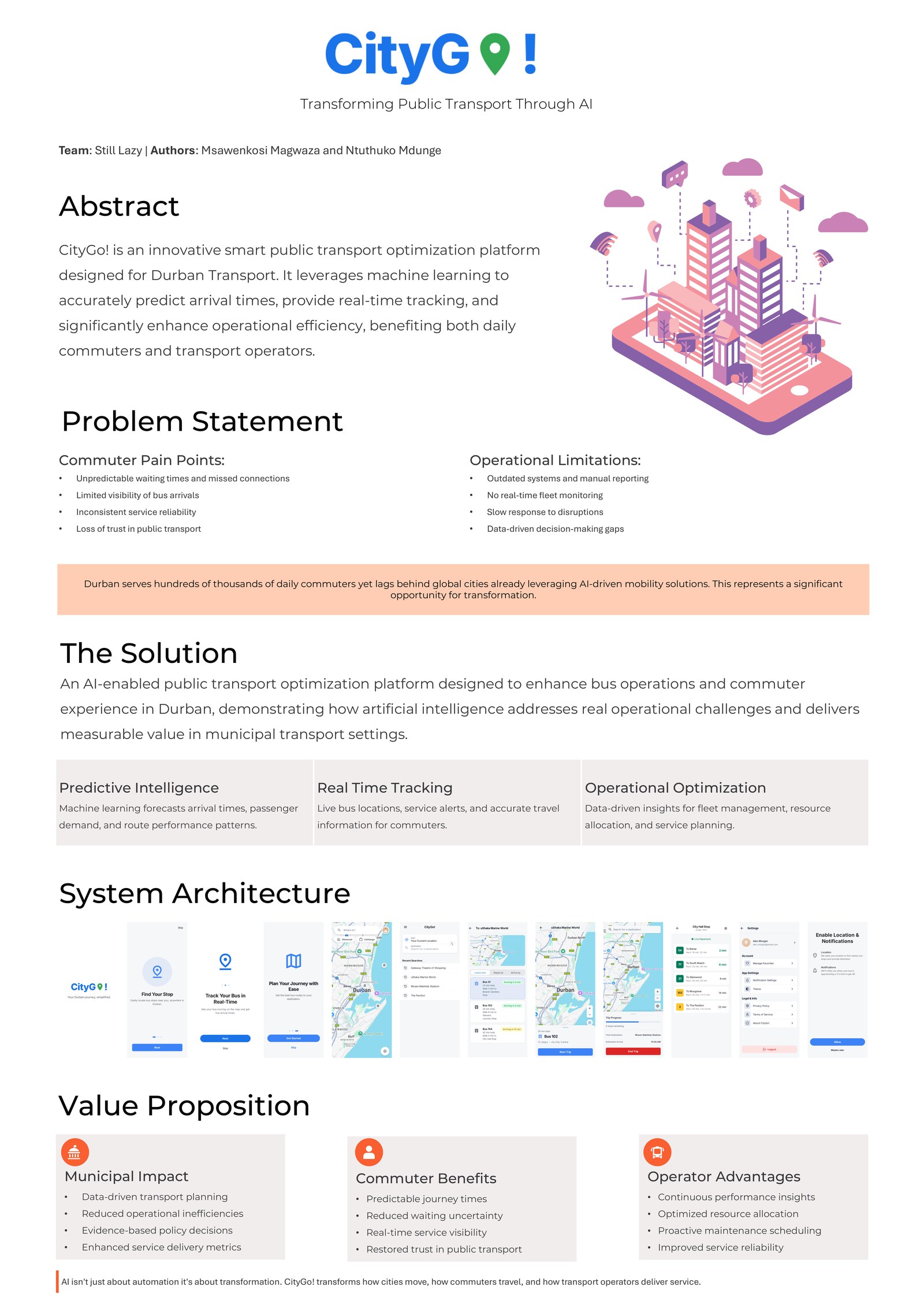
The problem
Durban's bus commuters deal with unpredictable waiting times, missed connections and little visibility of where a vehicle actually is. Operators, meanwhile, work with outdated reporting and have no real-time view of the fleet, which makes it hard to respond to disruptions or plan capacity with evidence.
CityGo! was a team concept for a platform that addresses both sides with the same data: machine-learning arrival predictions, live vehicle tracking, and an operations layer that turns the feed into planning insight.
The concept
- Predictive intelligence: forecast arrival times, passenger demand and route performance from historical and live data.
- Real-time tracking: show bus locations, service alerts and accurate travel information to commuters.
- Operational optimisation: give operators fleet visibility, resource allocation and proactive maintenance signals.
- Municipal value: evidence for route planning, service delivery metrics and policy decisions.
What it would take
The poster is a concept, not a deployed system, and the hard parts are data and operations rather than the model. A real build needs vehicle location feeds, reliable timetables, a data contract with the operator, and a fallback for when connectivity drops. The commuter interface is the easy layer to demo and the last layer that matters if the predictions are not trustworthy.
The value of the exercise was in framing the problem end to end: who the users are, what data each side needs, and how a prediction becomes a decision on a platform. That framing is the part that transfers to other data-heavy engineering problems.
Figures